

How can you easily Count your Calories And Macros - Protein, Carbohydrates, Fats?

In this comprehensive guide for
CHECK OUT - BEST MUSCLEBLAZE WHEY PROTEIN
MuscleBlaze Biozyme Performance Whey Protein Powder, Chocolate Peanut Butter (2kg / 4.4lbs) | 25g Protein Per Scoop
Check Price on Amazon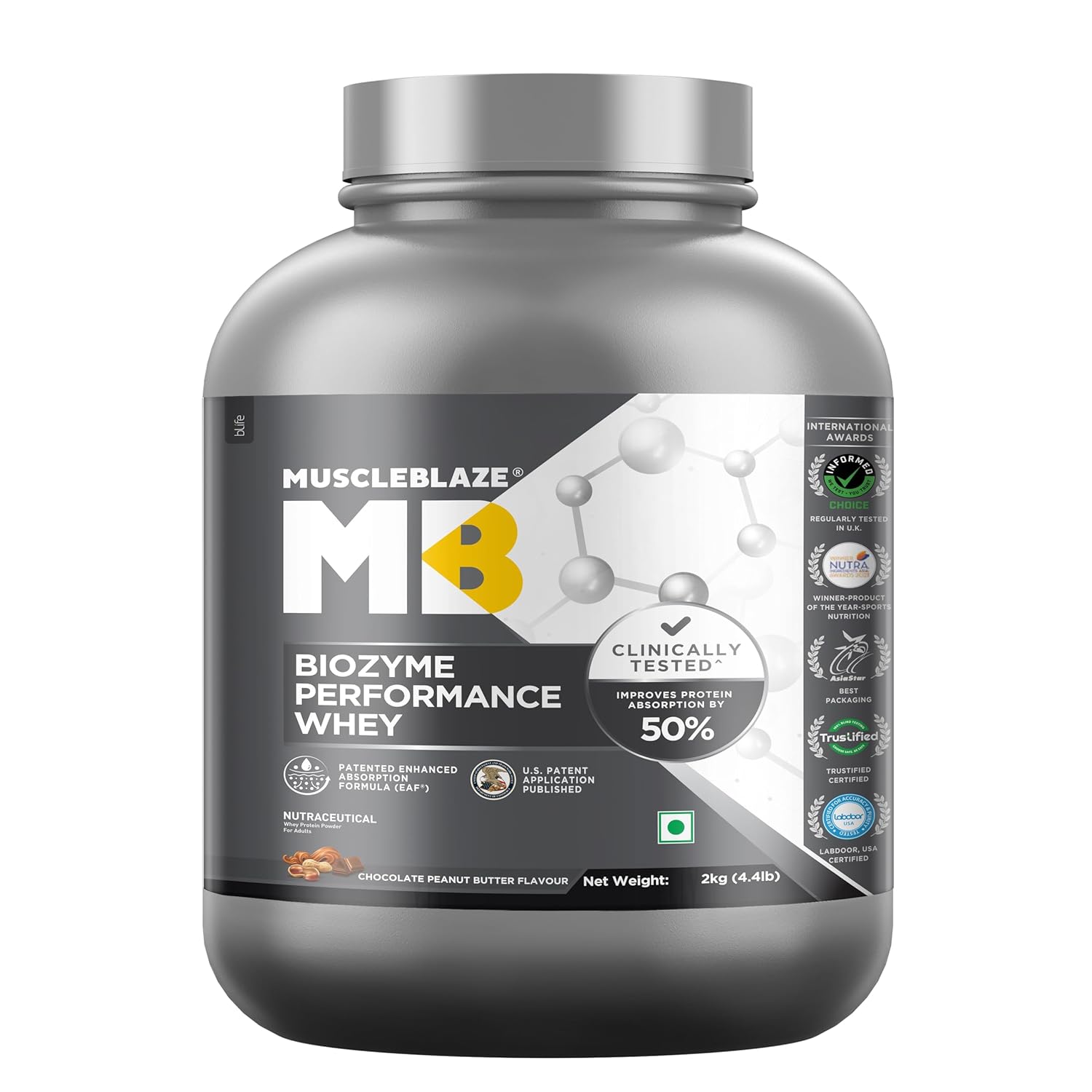

1. The Science of Calories: Energy Balance Explained

At its core, body composition is governed by the First Law of Thermodynamics: Energy cannot be created or destroyed, only transformed. In fitness, this is the Relationship between Calories In vs. Calories Out (CICO).
What is a Calorie?
A calorie is a unit of energy. Specifically, it is the amount of heat energy needed to raise the temperature of one gram of water by one degree Celsius. When you eat, you are providing your body with chemical energy to fuel everything from heartbeats to heavy deadlifts.
The Three States of Energy Balance:
Caloric Deficit: You burn more energy than you consume. The body taps into stored fat for fuel. (Goal: Fat Loss).
Caloric Surplus: You consume more energy than you burn. The body uses the extra energy to build tissue. (Goal: Muscle Gain).
Maintenance: You consume exactly what you burn. (Goal: Recomposition or Longevity).
PRO TIP: To find your specific starting point without doing manual math, use our CAL-TRACK calorie calculator on the this site. It calculates your BMR and TDEE in seconds.
A FREE CALORIE COUNTER
ON CAL-TRACK YOU ALL CAN COUNT YOU CALORIES AND YOUR PROTEIN, CARBS, FATS...
VISIT : CAL-TRACK
2. Understanding Your Metabolic Rate
Before you can count calories, you need to know your Total Daily Energy Expenditure (TDEE). Your TDEE is composed of four main factors:
BMR (Basal Metabolic Rate): The calories you burn at total rest (keeping organs functioning).
TEA (Thermic Effect of Activity): Calories burned during intentional exercise.
NEAT (Non-Exercise Activity Thermogenesis): Calories burned through subconscious movement (fidgeting, walking to the car, cleaning).
TEF (Thermic Effect of Food): The energy your body uses to digest nutrients (Protein has the highest TEF!).


3. What are Macros? (The Big Three)
Calories tell you how much to eat; Macros (Macronutrients) tell you what to eat to ensure that the weight you lose is fat and the weight you gain is muscle.
I. Protein (4 Calories per Gram)

The most critical macro for lifters. It repairs muscle tissue and has the highest satiety (keeps you full).
Target: 0.8g to 1.2g per pound of body weight.
II. Carbohydrates (4 Calories per Gram)

The body's preferred fuel source for high-intensity training. Carbs are "protein-sparing," meaning they prevent your body from burning muscle for energy.
Target: 40-60% of total calories depending on activity levels.
III. Fats (9 Calories per Gram)

Essential for hormone production (like Testosterone) and brain health. Fats are the most energy-dense macro.
Target: 20-30% of total calories.
CHECK OUT - BEST PEANUT BUTTER 100% PEANUTS ONLY
Pintola All Natural Peanut Butter Crunchy 1kg | Smooth, Unsweetened | 30g Protein | Gluten & Cholesterol Free, Vegan Peanut Butter, Nut Butter, High in Protein Spread, 100% Pure Roasted peanuts butter
Check Price on Amazon


4. Step-by-Step: How to Count Calories Like a Pro
Step 1: Calculate Your Target
Use CAL-TRACK at
Step 2: Weigh Your Food
Estimating with "cups" or "spoons" is notoriously inaccurate. A tablespoon of peanut butter can easily be 90 calories or 150 calories depending on how "heaping" it is. Use a digital food scale and measure in grams.
Step 3: Log Before You Eat
The biggest mistake beginners make is logging at the end of the day. By then, you’ve likely forgotten the oil you used to cook or the snack you grabbed. Log your meals in your tracking app before the fork hits your mouth.
Step 4: Track the "Hidden" Calories
Cooking Oils: One tablespoon of olive oil is 120 calories.
Liquid Calories: Sodas, juices, and creamers add up fast.
Condiments: Dressings and sauces are often sugar and fat bombs.
5. Introducing CAL-TRACK: Your Ultimate Nutrition Partner
Tracking shouldn't be a chore. We developed CAL-TRACK to be the most user-friendly calorie calculator for the Rahullifters community.
Why use CAL-TRACK?
Science-Based Algorithms: We use the Mifflin-St Jeer equation, the gold standard in clinical nutrition.
Custom Macro Splits: Whether you want "Keto," "High Carb," or "Balanced," CAL-TRACK gives you the exact gram requirements.
Progress Tracking: Adjust your calories as you lose weight to prevent plateaus.
6. Common Pitfalls in Calorie Counting
The "Weekend Warrior" Effect
Many people track perfectly from Monday to Friday but "blow it" on Saturday. A single 4,000-calorie cheat day can completely erase a 500-calorie deficit from the previous five days.
Overestimating Exercise Burn
Fitness watches often overestimate calories burned by 20-40%. If your watch says you burned 500 calories, do not "eat them back." Treat exercise as a bonus for your deficit, not a reason to eat more.
Ignoring Fiber
Fiber is a carbohydrate, but it isn't fully digested. Focusing on high-fiber foods (25g-35g per day) helps with digestion and keeps hunger at bay during a cut.
7. Frequently Asked Questions (FAQs)
How accurate do I need to be with counting?
Consistency is better than perfection. Aim to be within +/- 50 calories and +/- 10g of your macros. Your body is a biological system, not a calculator; small daily fluctuations are normal.
Should I track "Net Carbs"?
For most lifters, tracking Total Carbs is simpler and more effective. Net carbs (Total carbs minus fiber) are mostly relevant for those on strict medical Keto diets.
What do I do if I stop losing weight?
If your weight hasn't moved in 2 weeks, you have likely reached a "Maintenance" state because your body is now smaller. Use CAL-TRACK to recalculate your new, lower TDEE and drop your calories by another 100-200.
Can I eat "junk food" if it fits my macros?
This is called IIFYM (If It Fits Your Macros). While you can lose weight eating pizza if you stay in a deficit, your performance, health, and hunger levels will suffer. Aim for the 80/20 rule: 80% whole, single-ingredient foods and 20% "fun" foods.
Do I have to track for the rest of my life?
No! Tracking is a tool to teach you the caloric density of food. After 6-12 months of diligent tracking, most people develop the "eye" to intuitively eat while maintaining their physique.
8. Conclusion: Knowledge is Power
Counting calories and macros is the most objective way to guarantee results. It removes the emotion from dieting. When the scale doesn't move, you don't have to panic—you just have to look at the data.
Start your journey today by heading over to the CAL-TRACK tool at
READ MORE ARTICLE (YOU MIGHT FOUND HELPFUL):
CHECK-OUT - 🏃🏻♂️Top 10 Best Cardio Activities for Fat Loss✅
CHECK-OUT - Machine Exercise V/S Dumbbell Exercise
CHECK-OUT - 20 Best Low-Calorie Foods for Weight Loss
CHECK-OUT - The Ultimate Guide to the Mind-Muscle Connection
CHECK-OUT - TOP 10 OMEGA-3 RICH FOODS
CHECK OUT - BEST WELLCORE CREATINE FOR MUSCLE-GAINING
Wellcore Pure Micronised Creatine Powder (33 Servings, Tropical Tango) For Enhanced Muscle Strength
Check Price on Amazon


HERE YOU CAN COUNT YOUR DAILY CALORIES AND MACROS (PROTEIN, CARBS, FATS) 100% FREE-OF-COST
MAKE A CUSTOMIZED DAILY-DIET PLAN ACCORDING TO YOUR PREFERENCE (LIKE - VEGAN or NON-VEGAN, SUPPLIMENTS or WITHOUT-SUPPLIMENTS, GAINING or CUTTING)
HERE YOU CAN KEEP RECORDS YOUR GYM-WORKOUT/CARDIO (LIKE - REPS, SETS, NAME OF EXERCISE, VOLUME,).
Comments
Post a Comment