
What Is a Superset and How Does It Work?
Rahullifters.com — Evidence-based fitness education
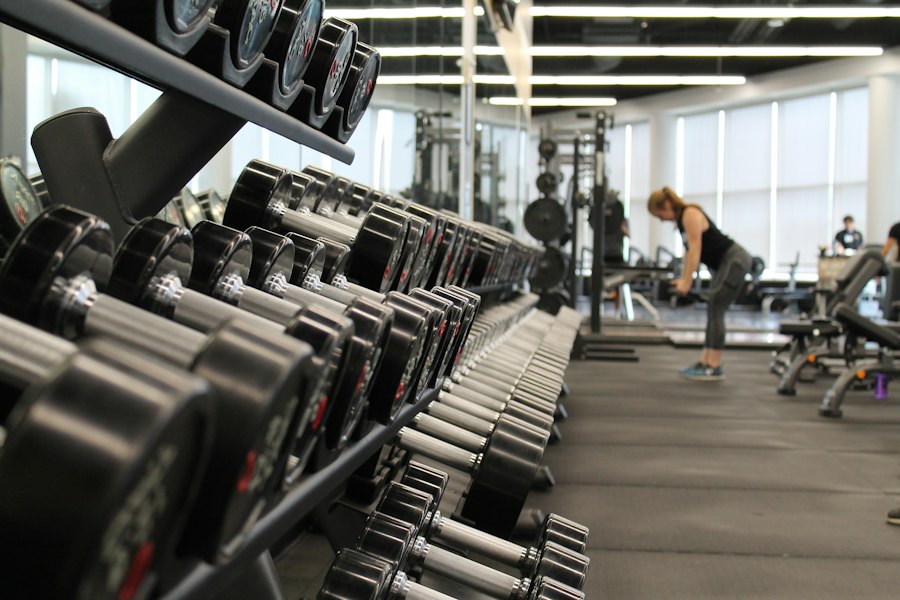
If you have ever watched someone in the gym do a set of bicep curls and immediately move to triceps pushdowns without resting, you have seen a superset. It is one of the most popular training methods used by bodybuilders, athletes, and everyday lifters.
But what exactly is a superset? How does it work inside the body? And is it worth adding to your training? Let us break it down in simple language, with a little science behind it.
ADVERTISEMENT
What Is a Superset?
A superset is when you perform two exercises back-to-back with no rest (or very little rest) between them. Only after finishing both exercises do you take a normal rest break. Then you repeat the pair for the required number of rounds.
For example, a superset might look like this:
- Exercise A: Dumbbell bench press — 10 reps
- Exercise B: Barbell row — 10 reps
- Rest: 60 to 90 seconds
- Repeat the pair for 3 to 4 rounds
This is different from a normal set structure, where you do one exercise, rest, do the same exercise again, and so on. In a superset, you pair two different exercises and train them as one block.
The Main Types of Supersets
Not all supersets are designed the same way. The best type depends on your goal.
1. Agonist-Antagonist Superset
This pairs two muscles that do opposite movements. For example, biceps and triceps, or chest and back. While one muscle works, the other rests, so fatigue is lower than it looks. This is the most common and beginner-friendly type.
2. Compound-Isolation Superset
This pairs a big compound lift with a smaller isolation lift for the same muscle. For example, bench press followed by cable flyes. It is often used for building a stronger pump and adding extra volume to a specific muscle.
3. Pre-Exhaust Superset
This flips the order: an isolation exercise comes first, then a compound lift. For example, leg extensions followed by squats. The idea is to pre-fatigue the target muscle so the compound lift feels harder on that muscle.
4. Same-Muscle Superset
This pairs two exercises for the same muscle group. For example, dumbbell curls followed by barbell curls. It creates a lot of metabolic stress and a strong pump, but it is also very tiring — this style is best for intermediate and advanced lifters.
If you want to plan supersets, drop sets, and intensity methods scientifically, use our 🔗 Intensity/Drop-Set Planner to design your training properly.
ADVERTISEMENT
How Does a Superset Work? (The Science, Made Simple)
Inside your muscles, energy is stored in a form called ATP and phosphocreatine. During a hard set, this energy is used up quickly. Normally, when you rest between sets, your body partially refills this energy before the next set.
In a superset, there is little or no rest. So when you move from Exercise A to Exercise B, your energy stores are still low. This creates three main effects:
- Higher metabolic stress: Waste products like lactate build up in the muscle. This creates the burning sensation and the “pump.” Research suggests this metabolic stress can help support muscle growth.
- More work in less time: You complete more total reps in the same session. This improves training efficiency, especially for people with limited gym time.
- Higher heart rate and calorie burn: Because rest is shorter, your heart rate stays elevated. This can burn more calories during and after the session.
The key point is this: supersets do not magically build more muscle than normal sets. They build muscle because they increase total training volume and density. If your total work is the same, the results will be similar. Supersets are simply a tool to get more work done in less time.
Curious about how many calories you burn during a superset workout? Use our 🔗 Calories Burning Tool to check the calorie cost of different activities.
ADVERTISEMENT
Main Benefits of Supersets
- Saves time: You can finish a full workout in less time without reducing total volume.
- Increases workout density: More work in the same session means more muscle stimulus.
- Boosts calorie burn: Higher heart rate and shorter rest lead to more calories burned.
- Improves conditioning: Supersets train your cardiovascular system along with your muscles.
- Better muscle pump: The higher metabolic stress creates a strong pump, which many lifters enjoy.
If you want to add supersets to your weekly routine, our 🔗 Workout Plan Maker can help you build a structured program that includes supersets properly.
Who Should Use Supersets and Who Should Avoid Them?
Supersets are great for:
- People with limited gym time
- Intermediate lifters who want more volume
- Fat loss phases where calorie burn matters
- Bodybuilders who want a strong pump and muscle-shaping work
Be careful with supersets if:
- You are a complete beginner still learning form
- You are doing heavy compound lifts (squat, deadlift, bench press) — these need full rest for safety
- You are training for pure strength (low reps, heavy weight)
- You have joint pain or are recovering from injury
How to Use Supersets Correctly
- Use supersets for isolation and accessory exercises, not heavy compound lifts
- Pair opposite muscles (biceps + triceps, chest + back) for better recovery between sets
- Keep the reps moderate — 8 to 15 reps works well for most supersets
- Rest 60 to 90 seconds after each superset pair
- Do not superset more than 2 exercises — anything beyond that becomes a circuit
- Track every set and rep with our 🔗 Workout Log Tracker so you know your progress
If you train after a meal or supplement, find the ideal gap using our 🔗 Pre-Workout Gap Finder to make sure your energy is ready for higher-density training.
Common Mistakes People Make
- Supersetting heavy compound lifts and using poor form
- Resting too long between exercises and losing the superset effect
- Using too many supersets in one workout, leading to fatigue and poor recovery
- Pairing exercises that use the same muscles every time, which reduces performance on the second exercise
- Confusing supersets with circuits and doing 3 to 4 exercises back-to-back with no purpose
- Ignoring sleep and nutrition — supersets increase recovery demand
ADVERTISEMENT
Frequently Asked Questions
Q1. Are supersets better than normal sets?
Not better or worse — just different. Supersets are more efficient and burn more calories, but normal sets allow heavier lifting and better strength gains.
Q2. Can beginners do supersets?
Yes, but beginners should use them on isolation exercises only, not heavy compound lifts. Focusing on form and consistency matters more at this stage.
Q3. How many supersets should I do per workout?
Two to three superset pairs per workout is a good starting point. More than that can hurt recovery and performance.
Q4. Are supersets good for fat loss?
Yes. They raise your heart rate and burn more calories per session, which helps in a fat loss phase. But fat loss still depends mainly on your calorie intake.
Q5. Can I do supersets for strength training?
Not ideal. Strength training needs full rest between heavy sets. Supersets work best for hypertrophy, fat loss, and time-efficient workouts.
🏁 Final Takeaway
A superset is a simple but powerful training method: two exercises done back-to-back with little rest. It works by increasing metabolic stress, workout density, and calorie burn. Supersets are not magic — they are a tool that helps you do more work in less time. Used correctly — mostly on isolation exercises, with proper pairing and rest — they can improve your training efficiency, muscle pump, and overall results. Just make sure your sleep, nutrition, and recovery are in place, because supersets increase your body's demand.
SPONSORED
This article is for educational purposes only and is not medical advice. Consult a qualified professional for personal guidance.