
💪Compound vs Isolation Exercises - The Major Difference Explained🏋️♂️
rahullifters.com — Evidence-based fitness education
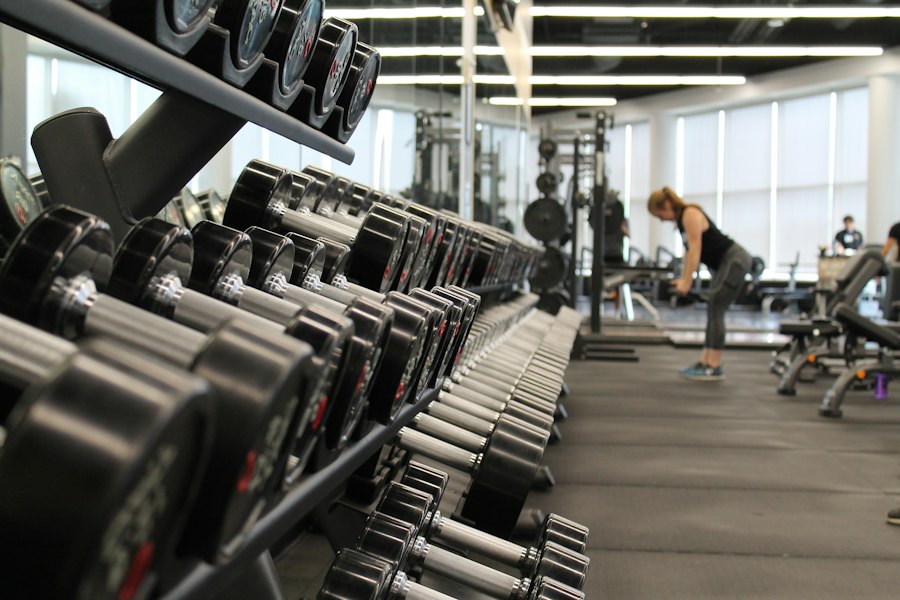
Walk into any gym and you will see two very different types of movement happening side by side. Someone is doing heavy squats with a barbell, while another person is doing bicep curls with dumbbells. Both are working hard, but they are doing very different things for their body.
This is the classic compound vs isolation debate. Understanding the difference will help you train smarter — not just harder.
ADVERTISEMENT
What Are Compound Exercises?
Compound exercises are movements that involve more than one muscle group and more than one joint at the same time. When you perform a squat, your quadriceps, glutes, hamstrings, lower back and core all work together. The bench press uses your chest, shoulders, triceps and core. The deadlift works almost your entire body.
Because multiple joints are involved, compound exercises allow you to lift heavier loads and create a bigger training stimulus. They also train your coordination and balance, which carries over into daily life and other sports.
Wondering how much weight you are actually lifting on the bar? Try our 🔗 Barbell Plates Calculator to find the exact total load per side. And to estimate your true strength, use the 🔗 1RM Calculator.
What Are Isolation Exercises?
Isolation exercises focus on a single muscle group and typically involve only one joint. A bicep curl isolates the biceps. A lateral raise isolates the side delts. A leg extension isolates the quadriceps.
Because fewer muscles are involved, you can usually feel the target muscle working more clearly. This is often called the mind-muscle connection. Isolation exercises are useful for bringing up lagging body parts, adding extra volume to specific muscles, and finishing a workout with a targeted pump.

ADVERTISEMENT
The Major Differences at a Glance
| Factor | Compound | Isolation |
|---|---|---|
| Muscles used | Multiple | Single |
| Joints involved | Two or more | One |
| Load potential | High | Low to moderate |
| Calorie burn | Higher | Lower |
| Recovery demand | Higher | Lower |
| Best for | Overall strength & size | Targeted muscle work |
When to Use Compound vs Isolation
Use compound exercises when your goal is to build overall strength, add muscle mass efficiently, or improve athletic performance. Exercises like squats, deadlifts, bench presses, rows, overhead presses, and pull-ups give you the most return on your time. Many successful programs are built around 4 to 6 compound lifts per session. If you want a ready-made structure, try our 🔗 Workout Plan Maker
Use isolation exercises when you want to focus on a specific muscle that is lagging behind. For example, if your arms look small compared to your torso, adding direct bicep and tricep work makes sense. Isolation moves are also useful for pre-exhausting a muscle before a heavy lift, for rehabilitation, and for finishing volume at the end of a session. They put less stress on your joints and nervous system. If you want to plan your intensity and drop sets scientifically, use our 🔗 Intensity/Drop-Set Planner
ADVERTISEMENT
How to Combine Both for Best Results
Most effective training programs use both types of exercise. A simple rule: start your workout with compound movements while you are fresh, then move to isolation work as your session progresses.
For example, a chest day might begin with a barbell bench press, then move to incline dumbbell press, then finish with cable flyes and tricep pushdowns. This gives you the strength and hormonal benefits of compound work, and the targeted pump and volume of isolation work.
Track every set, rep, and weight so you know exactly how your strength is progressing over time with our 🔗 Workout Log Tracker. If you train after a meal or pre-workout, use the 🔗 Pre-Workout Gap Finder to find the ideal time between eating and training.
Common Mistakes People Make
- Doing only isolation exercises and wondering why overall strength is not improving
- Doing only compound lifts and neglecting weak or lagging muscles
- Using too much weight on isolation moves and losing form
- Skipping compound movements because they feel harder
- Doing isolation work before compound lifts, which reduces strength on the big movements
ADVERTISEMENT
Frequently Asked Questions
Q1. Should beginners only do compound exercises?
Beginners should focus mostly on compound movements, but adding a few isolation exercises for arms, calves, and core is fine. Balance matters more than one type.
Q2. Can I build muscle with only isolation exercises?
Yes, but it is less efficient. You would need many more exercises and much more time to train every muscle individually. Compound lifts save time.
Q3. How many compound and isolation exercises per workout?
A good rule is 2 to 4 compound exercises first, followed by 2 to 4 isolation exercises. This keeps workouts effective without overloading your recovery.
Q4. Are compound exercises always better?
No. Compound exercises are more efficient for overall strength and size, but isolation moves are better for targeting weak muscles and correcting imbalances.
Q5. How do I know when to add isolation work?
If a specific muscle looks underdeveloped compared to the rest of your body, or if you cannot feel it working during compound lifts, adding isolation exercises is a smart move.
🏁 Final Takeaway
Compound exercises and isolation exercises are not enemies — they are partners. Compound movements build the foundation of strength and size, while isolation exercises refine and complete your physique. A smart training plan uses both: start with compound lifts when your energy is highest, finish with isolation work for targeted muscle growth. Do not fall into the trap of choosing one over the other. Use both, track your progress, and let science guide your choices.
SPONSORED
This article is for educational purposes only and is not medical advice. Consult a qualified professional for personal guidance.