

Biceps Muscle Structure: Complete Science Behind Explosive Arm Growth

In the fitness world, nothing signals a powerful upper body quite like a pair of well-developed, peaked biceps. Yet, many lifters visiting rahullifters.com hit plateaus quickly because they treat the biceps as a single, simple muscle that just requires endless basic curls.
To break through your plateaus and forge impressive, three-dimensional arms, you must understand the underlying structural anatomy. This comprehensive, scientific guide breaks down the full anatomy of the biceps and adjacent upper-arm musculature, providing the absolute best exercises to target every specific head and zone.
Anatomy of the Biceps and Upper Arm Complex
The term "biceps" literally translates to "two heads." The main muscle group on the front of your arm is the biceps brachii, which is structurally split into the Short Head (Inner Biceps) and the Long Head (Outer Biceps).
However, true 3D arm thickness is incomplete without addressing two closely related muscles: the brachialis (which sits deep beneath the biceps) and the brachioradialis (the thick muscle linking your arm to your forearm). Maximizing your genetic potential requires manipulating your arm positioning to emphasize each distinct zone.
Biceps Anatomical & Functional Breakdown
| Muscle Structure | Anatomical Location | Primary Function | Optimal Training Angle |
|---|---|---|---|
| Biceps Brachii: Long Head | Outer aspect of the upper arm | Forearm Supination & Shoulder Flexion | Arm extended behind the torso |
| Biceps Brachii: Short Head | Inner aspect of the upper arm | Forearm Supination & Arm Flexion | Arm positioned in front of the torso |
| Brachialis | Deep beneath the lower biceps | Pure Elbow Flexion (No Supination effect) | Pronated (overhand) or neutral grip |
| Brachioradialis | Top of the forearm near the elbow | Elbow Flexion when semi-pronation occurs | Neutral (neutral vertical) hammer grip |
1. The Long Head (Building the Peak)

The long head forms the outer part of the biceps muscle complex. When you perform a side-chest pose or look at your arms from the side, the long head creates the vertical height and sharp "peak" that lifters covet.
Biomedically, the long head crosses over the shoulder joint. This means that to put the long head under maximum stretch, you must position your elbows *behind* your body. When a muscle is pre-stretched before contraction, it is forced to recruit more motor units and handle more mechanical tension.
The absolute king of long-head exercises is the **Incline Dumbbell Curl**. Sit on an incline bench set to roughly 45 to 60 degrees, let your arms hang completely straight down behind your torso, and curl up while keeping your elbows securely locked in place.
Are your arm isolation numbers moving upward? Ensure progressive overload by tracking every pound and set using our Click Here To Use our WORKOUT-LOG To Track And Note Your Sets/Reps/Total Volume And Keep The Record Of Every Workout.
2. The Short Head (Adding Inner Thickness)

The short head forms the inner section of your front arm. Developing the short head ensures your arms look massive, wide, and full when viewed directly from the front in a relaxed state.
To maximize short-head activation, you need to bring your elbows *forward* relative to your torso. This position places the long head into a state of active insufficiency, forcing the inner short head to shoulder the vast majority of the load.
The premier exercise for short-head isolation is the **Preacher Curl** (using either a barbell, EZ-bar, or dumbbells). By resting your triceps securely against a sloped pad, you eliminate momentum completely and place direct mechanical stress onto the lower, inner portion of the biceps structure.
Muscle growth requires premium nutritional fuel. Calculate your ideal caloric surplus and macro requirements with our Click Here To Use Owr CAL-TRACK To Count You Calories/Macros (Protein, Carbs, Fats).
3. The Brachialis & Brachioradialis (The Width Boosters)

The brachialis sits under the lower portion of your biceps. Think of it as an underlying wedge; as it grows larger, it physically pushes your biceps brachii upward and outward, instantly creating wider, thicker arms from the front view.
Because the brachialis inserts directly into your ulna bone, it functions as a pure elbow flexor. It does not care if you rotate your wrist. In fact, twisting your wrist outward actually reduces its contribution. To force it to work, you must use a neutral vertical grip or an overhand grip.
The best movements for this region are **Dumbbell Hammer Curls** and **Reverse-Grip EZ-Bar Curls**. Hammer curls heavily tax both the brachialis and the brachioradialis, building an seamless connection between your upper arm and upper forearms.
The Master Key: Supination
The most common mistake made in the gym is simply moving a weight from point A to point B without understanding forearm rotation. The primary anatomical function of the biceps brachii isn't actually bending the elbow—it is **supination**, which means turning your palm upward toward the ceiling.
When you perform a dumbbell curl, do not keep your hands flat. Start with your palms facing each other at the bottom, and as you lift, actively twist your pinky fingers outward as hard as possible at the top of the contraction. This twist creates a complete, cramping squeeze that activates every single available muscle fiber.
Ready to structure a balanced, professional workout routine? Build a completely personalized path today using our Click Here To Use Our CUSTOM DIET-PLAN-MAKER To Make Your Daily Custom-Eating-Plan.
CHECK OUT - BEST WELLCORE CREATINE FOR MUSCLE-GAINING
Wellcore Pure Micronised Creatine Powder (33 Servings, Tropical Tango) For Enhanced Muscle Strength
CLICK HERE TO CHECK PRICE ON AMAZON


Optimizing Frequency and Training Volume
Because the biceps are a smaller muscle group primarily composed of fast-twitch fibers, they recover faster than larger muscle chains like your legs or back. However, they also receive heavy secondary stimulation during all vertical and horizontal pulling movements (like pull-ups and rows).
For maximum growth, isolate your biceps 2 times a week, allowing 48 to 72 hours of complete rest between sessions. Keep your total direct working volume around 6 to 10 sets per week, focusing intensely on high execution quality, a controlled negative phase, and perfect form rather than ego lifting heavy weights.
Frequently Asked Questions
Q: Why are my biceps not growing despite heavy lifting?
A: You are likely using momentum from your lower back or shifting the load to your front shoulders. Keep your shoulders pulled back and fix your elbows firmly in place.
Q: Can I build huge biceps using only a straight barbell?
A: While a straight barbell is excellent for raw mass, it locks your wrists into a fixed plane. Supplementing with dumbbells and cables allows you to hit the angles required for balanced 3D growth.
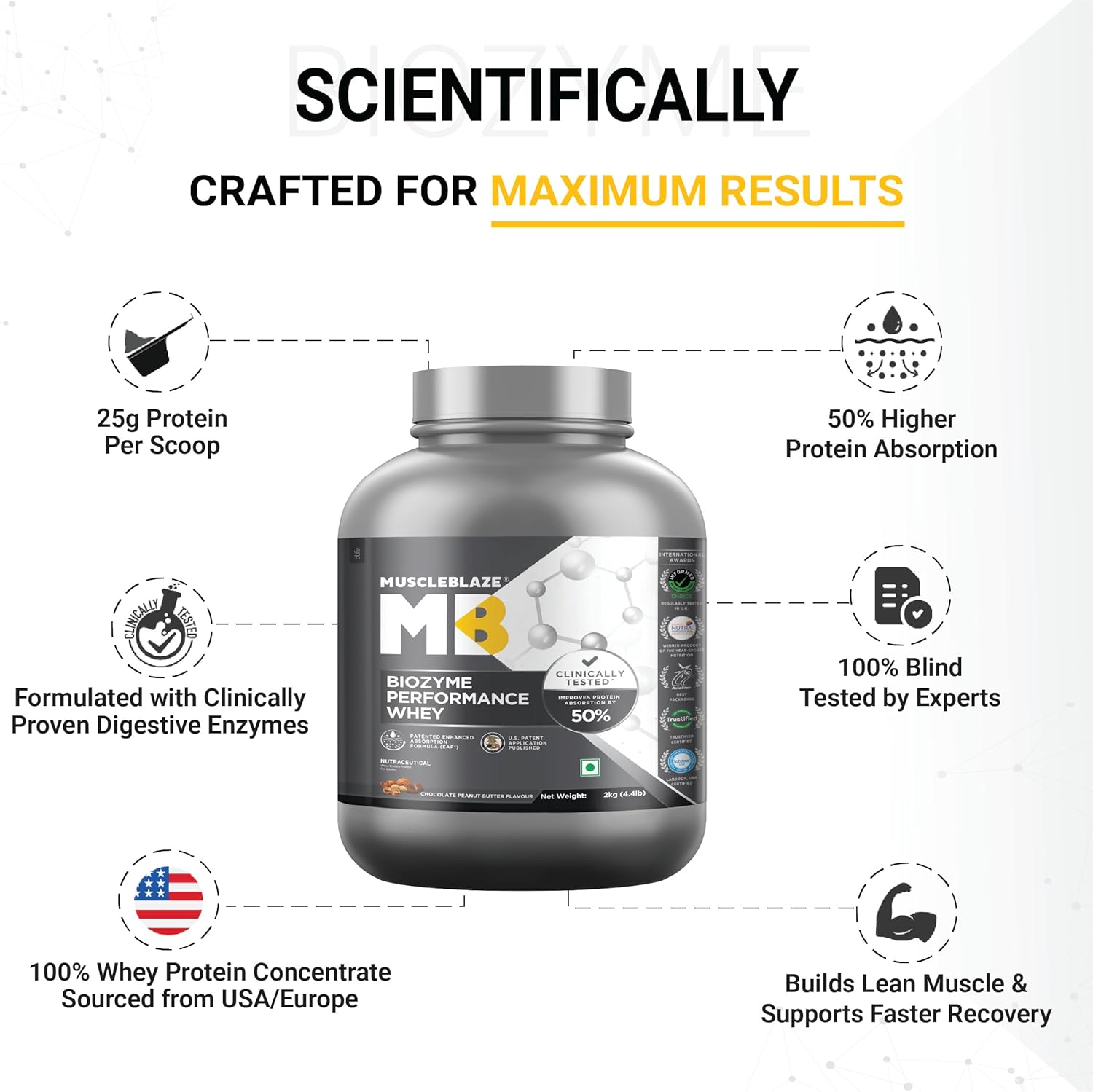
CHECK OUT - BEST MUSCLEBLAZE WHEY PROTEIN
MuscleBlaze Biozyme Performance Whey Protein Powder, Chocolate Peanut Butter (2kg / 4.4lbs) | 25g Protein Per Scoop
CLICK HERE TO CHECK PRICE ON AMAZON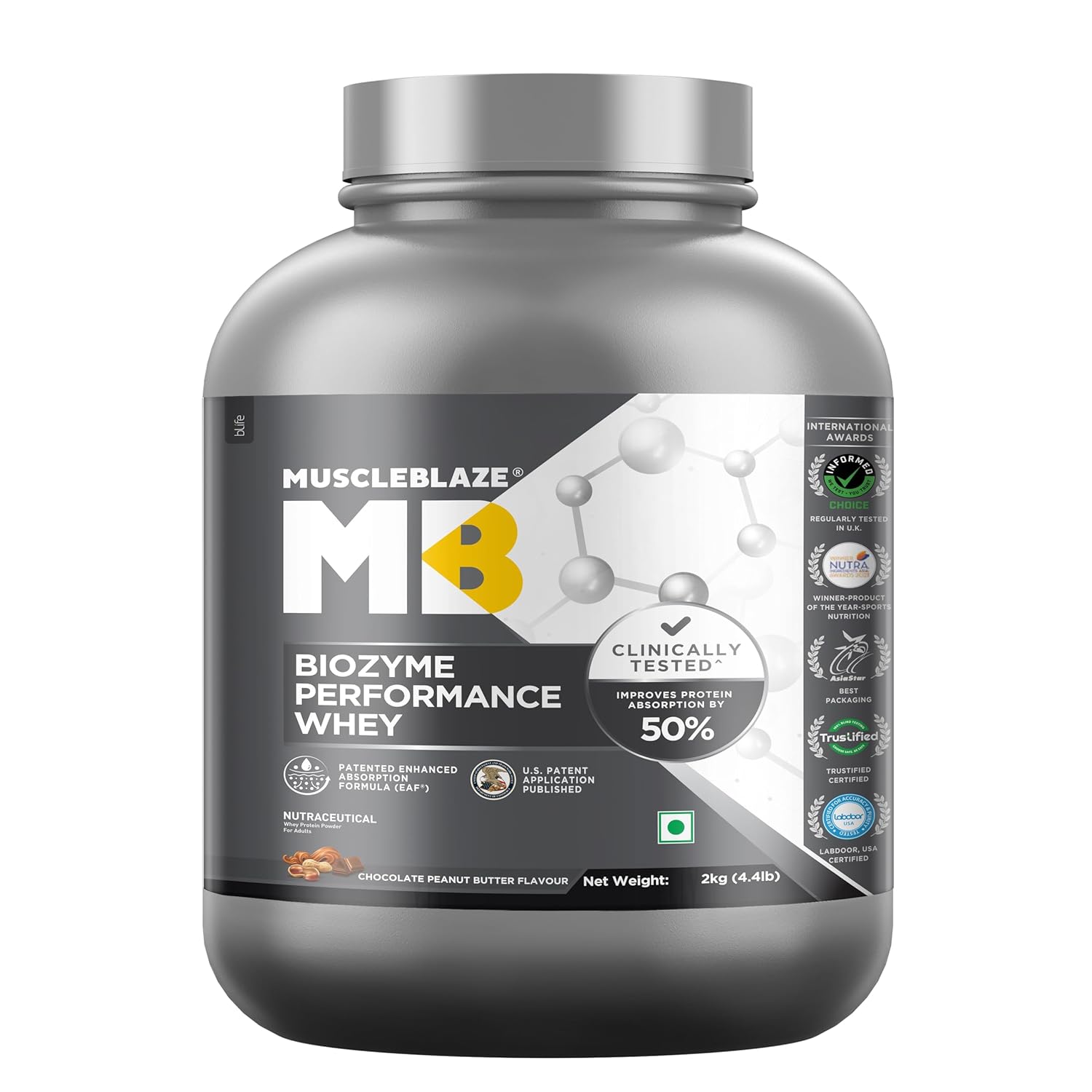

Building elite arms is a game of angles, anatomy, and absolute execution precision. Train both heads, master your grip variations, track your growth metrics diligently, and push your physical limits at rahullifters.com!
Comments
Post a Comment