

Compound V/S Isolation Exercise - AtoZ Scientific comparison (WHICH IS BETTAR, BANIFITS, EXAMPLES...)

Which One Actually Builds More Muscle?
In the world of fitness, the debate between Compound and Isolation exercises is as old as the iron itself. Whether you are a seasoned bodybuilder or a beginner stepping into the gym for the first time, understanding how these two styles of training impact your physiology is the key to unlocking your true potential.
But this isn't just about picking one over the other. It’s about knowing when to use a sledgehammer and when to use a scalpel. In this comprehensive guide, we will dive deep into the mechanics, benefits, and drawbacks of both, providing a definitive roadmap for your physique transformation.
CHECK OUT - BEST WELLCORE CREATINE FOR MUSCLE-GAINING
Wellcore Pure Micronised Creatine Powder (33 Servings, Tropical Tango) For Enhanced Muscle Strength
Check Price on Amazon


1. Defining the Heavy Hitters: What is a Compound Exercise?
A Compound Exercise is any movement that involves multiple joints and multiple muscle groups working in unison. Think of these as the "bread and butter" of any strength program. When you perform a compound lift, your body coordinates several muscle chains to move a significant amount of weight.
The Mechanics of Compound Lifts
Because these movements require total-body coordination, they trigger a massive neurological response. You aren't just training your muscles; you are training your central nervous system (CNS) to fire efficiently.
Examples of Compound Exercises:
Squats: Involves the hips, knees, and ankles (Quads, Glutes, Hamstrings, Lower Back).
Deadlifts: The ultimate full-body mover (Posterior chain, Core, Forearms).
Bench Press: Involves the shoulder and elbow joints (Chest, Triceps, Anterior Deltoids).
Pull-ups/Rows: (Back, Biceps, Rear Deltoids).
Key Benefits of Compound Movements
Maximum Caloric Burn: Because more muscles are working, your heart rate spikes higher, leading to more calories burned during and after the workout (the EPOC effect).
Hormonal Response: Heavy compound lifts are scientifically proven to boost the natural production of testosterone and growth hormone.
Efficiency: You can hit 80% of your body’s musculature with just 4 or 5 key movements.
Functional Strength: These movements mimic real-world activities, like lifting a heavy box or squatting down to pick something up.
A FREE CALORIE COUNTER
ON CAL-TRACK YOU ALL CAN COUNT YOU CALORIES AND YOUR PROTEIN, CARBS, FATS...
VISIT : CAL-TRACK
2. The Precision Tools: What is an Isolation Exercise?
An Isolation Exercise targets a single joint and a single muscle group. The goal here isn't to move the most weight possible, but to create a localized "pump" and ensure a specific muscle is doing 100% of the work.
The Mechanics of Isolation
Isolation moves remove the "helpers." For example, in a Bench Press, your triceps might take over if your chest is weak. In a Chest Fly, the triceps are removed from the equation, forcing the pectorals to handle the load alone.
Examples of Isolation Exercises:
Bicep Curls: Only the elbow joint moves.
Leg Extensions: Only the knee joint moves (targets the Quads).
Lateral Raises: Only the shoulder joint moves (targets the Medial Deltoid).
Calf Raises: Only the ankle joint moves.
Key Benefits of Isolation Movements
Fixing Imbalances: If one arm is bigger than the other, isolation allows you to even the score.
Targeted Hypertrophy: If you want "mountain-peak" biceps or "teardrop" quads, you need the precision of isolation.
Injury Rehabilitation: These allow you to strengthen a specific area without putting stress on other potentially injured joints.
The Mind-Muscle Connection: It is much easier to "feel" a muscle working during a curl than during a heavy deadlift.
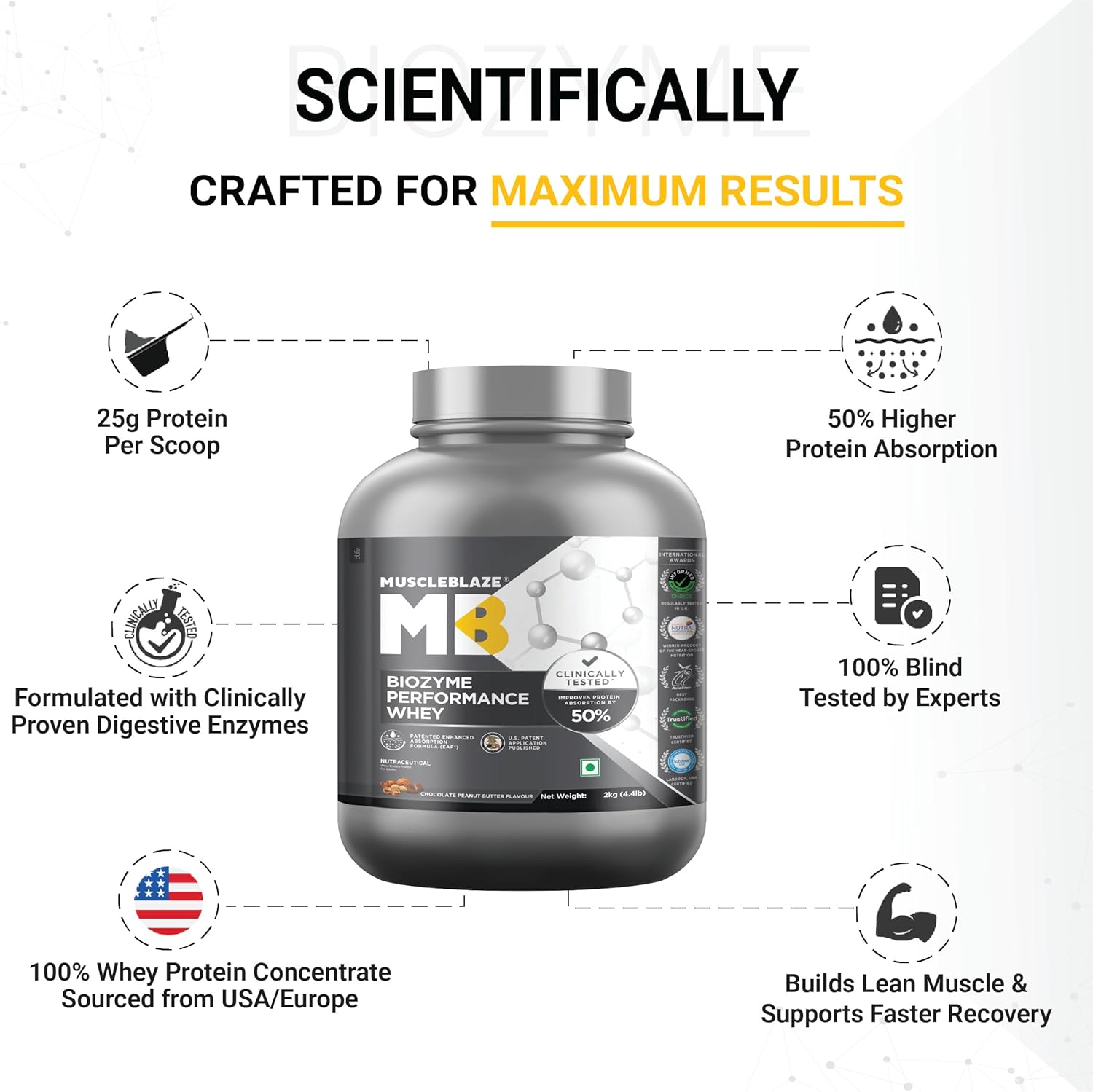
CHECK OUT - BEST MUSCLEBLAZE WHEY PROTEIN
MuscleBlaze Biozyme Performance Whey Protein Powder, Chocolate Peanut Butter (2kg / 4.4lbs) | 25g Protein Per Scoop
Check Price on Amazon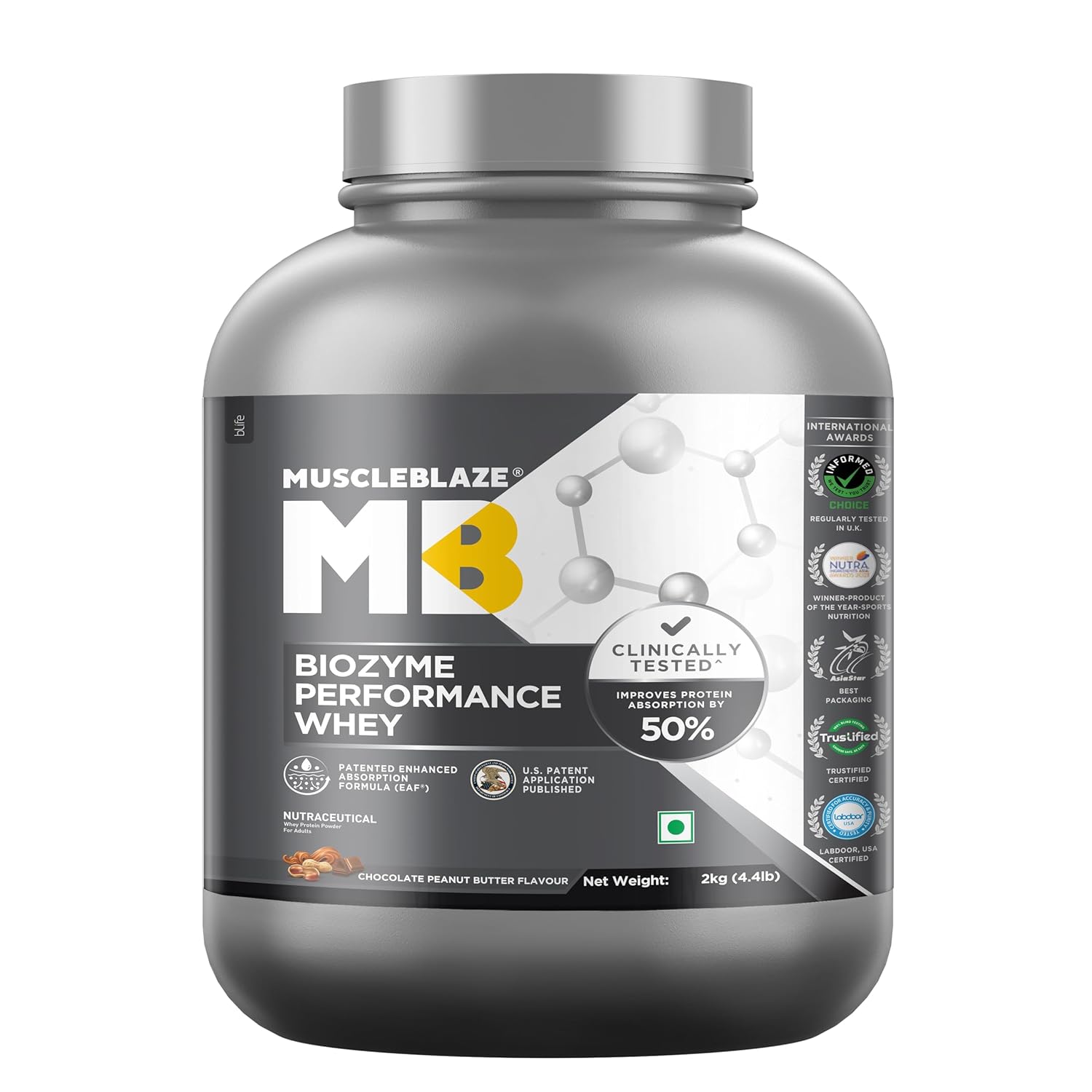

3. The Deep Comparison: Head-to-Head
To help you decide how to structure your routine, let’s compare them across the most important fitness metrics.
| Feature | Compound Exercises | Isolation Exercises |
| Primary Goal | General Strength & Mass | Detail & Symmetry |
| Joints Involved | Multiple (2+) | Single (1) |
| Weight Capacity | High | Low to Moderate |
| CNS Fatigue | High | Low |
| Calorie Burn | High | Low |
| Risk of Injury | Moderate (due to heavy load) | Low (due to controlled movement) |
| Best for... | Beginners & Athletes | Bodybuilders & Rehab |
4. Hypertrophy Science: The "Size" Factor
If your goal is Hypertrophy (muscle growth), you need three things: Mechanical Tension, Metabolic Stress, and Muscle Damage.
Mechanical Tension (The Strength Phase)
Compound lifts excel here. To grow, you must subject the muscle to heavy loads. You simply cannot overload your body with a tricep kickback the same way you can with a Weighted Dip. Compound lifts allow for Progressive Overload—the most important factor in long-term growth.
Metabolic Stress (The "Pump")
Isolation exercises are the kings of metabolic stress. By performing high-rep sets of lateral raises or leg curls, you trap blood in the muscle (occlusion), leading to the "pump" that signals the body to repair and grow tissues.
5. Efficiency vs. Volume: Time Management in the Gym
For the average person with a 9-to-5 job, time is the biggest constraint.
The Compound Approach: A workout consisting of Squats, Overhead Press, and Rows can be finished in 45 minutes and covers every major muscle group.
The Isolation Approach: Trying to hit every muscle individually (Front delts, side delts, rear delts, upper chest, mid chest, etc.) would take 3 hours.
The Verdict: If you are short on time, Compound movements should make up 80% of your routine.
6. Risk and Recovery: The Hidden Cost
There is no such thing as a free lunch in fitness.
Compound lifts are taxing. A heavy set of deadlifts doesn't just tire your muscles; it drains your nervous system. If you do nothing but heavy compounds 6 days a week, you will likely hit a wall of overtraining or "burnout."
Isolation lifts allow you to add "junk volume" (extra work) without a high recovery cost. You can do bicep curls almost every day because they don't tax the spine or the brain's signaling pathways significantly.
7. How to Structure Your Workout (The Golden Ratio)
The most effective way to train is to use a Reverse Pyramid of Complexity.
The Main Lift (Compound): Start with your heaviest, most complex move while you are fresh (e.g., Barbell Squat).
The Secondary Lift (Compound): Follow up with a slightly less taxing multi-joint move (e.g., Lunges).
The Finisher (Isolation): End the session with 1-2 isolation moves to fully exhaust the muscle (e.g., Leg Extensions).
Sample "Push Day" Routine:
Bench Press (Compound): 3 Sets of 5-8 reps (Heavy Strength)
Overhead Press (Compound): 3 Sets of 8-10 reps (Shoulder Mass)
Incline Dumbbell Press (Compound): 3 Sets of 10-12 reps (Upper Chest)
Tricep Pushdowns (Isolation): 3 Sets of 15 reps (The Finish)
Lateral Raises (Isolation): 3 Sets of 15-20 reps (Detailing the Delts)
8. Addressing Common Myths
Myth 1: "Squats are all you need for big legs."
Reality: While squats are amazing, they often leave the hamstrings under-stimulated. You need isolation moves like Leg Curls to ensure a balanced physique.
Myth 2: "Isolation exercises are for 'toning'."
Reality: There is no such thing as "toning." You either build muscle or lose fat. Isolation exercises build muscle just as compounds do; they just do it in a more specific area.
Myth 3: "Compounds are too dangerous for beginners."
Reality: Beginners should start with compounds (under supervision) to learn how their body moves as a unit. Starting with only machines/isolation can lead to "fake strength" where the stabilizer muscles remain weak.
9. Conclusion: Which is Superior?
The answer is neither—and both.
If you want to be a powerhouse with a thick, dense physique, you must master the Compound lifts. They are the foundation upon which everything else is built. However, if you want to sculpt that physique, fix your weaknesses, and avoid injury, you must supplement with Isolation exercises.
The Pro Strategy: Spend the first half of your workout moving heavy weights through multiple joints. Spend the second half chasing the pump and focusing on the muscles that didn't get enough love.
Key SEO Takeaways:
Compound Exercises are best for strength, calories, and time efficiency.
Isolation Exercises are best for symmetry, aesthetics, and injury rehab.
A balanced program includes both, starting with the heaviest movements first.
Frequently Asked Questions (FAQ)
Q: Can I build muscle with only isolation exercises?
A: Yes, but it is highly inefficient and you will lack overall "functional" strength and structural integrity.
Q: Should I do isolation before compound?
A: Generally, no. This is called "Pre-Exhaustion." It is an advanced technique used to fatigue a specific muscle, but for 95% of people, it will just make your heavy lifts weaker and less effective.
Q: How many isolation exercises per workout?
A: Usually 1 or 2 per muscle group is plenty after your main compound movements are finished.
HERE YOU CAN COUNT YOUR DAILY CALORIES AND MACROS (PROTEIN, CARBS, FATS) 100% FREE-OF-COST
IMAKE A CUSTOMIZED DAILY-DIET PLAN ACCORDING TO YOUR PREFERENCE (LIKE - VEGAN or NON-VEGAN, SUPPLIMENTS or WITHOUT-SUPPLIMENTS, GAINING or CUTTING)
HERE YOU CAN KEEP RECORDS YOUR GYM-WORKOUT/CARDIO (LIKE - REPS, SETS, NAME OF EXERCISE, VOLUME,).
Comments
Post a Comment