

The Truth About Progressive Overload (Beyond Just Adding Weight)

When lifters first step into the gym, the most common piece of advice they receive is to practice progressive overload. Most people assume this concept simply means adding heavier iron plates to the barbell week after week. While increasing the raw load is a fundamental aspect of strength development, relying solely on weight progression eventually leads to severe execution plateaus, chronic joint strain, and psychological burnout. In reality, progressive overload is a multifaceted training principle that encompasses any strategic modification that forces muscle tissue to perform a higher volume of total work over time.
What is Progressive Overload Realistically?
To understand progressive overload beyond heavy resistance, you must examine how muscle tissue responds to physical stress. When you lift weights, you cause localized microscopic tears in the muscle fibers. Your body responds to this stress by adapting, repairing, and expanding those fibers so they can withstand future tension more efficiently. However, if the total physical stimulus remains identical in subsequent workouts, your body recognizes no physiological reason to allocate metabolic resources toward building new muscle mass. To keep the hyper-adaptation process active, you must continuously challenge your muscular structures by varying the specific training metrics.
The Danger of Ego Lifting and Weight Obsession
Forcing yourself to add weight to an exercise before your body is actually prepared for it triggers a counterproductive phenomenon known as ego lifting. When a barbell is too heavy for a specific target muscle to move, your nervous system automatically compensates by shifting the mechanical load onto your surrounding joints, connective tissues, and secondary muscle groups. For instance, an overly heavy barbell bicep curl quickly transforms into an unstable lower back and shoulder movement. This shift not only completely removes the tension from the muscle you are trying to grow, but it also dramatically increases your risk of acute injuries and connective tendonitis.
The Five Core Methods of True Muscle Overload
If you want to achieve continuous, predictable muscle hypertrophy without compromising your joint integrity, you must expand your training toolkit. There are several highly effective ways to elevate your training stimulus that do not require you to touch a heavier dumbbell. By manipulating these variables systematically, you can break through stubborn muscle plateaus and keep your physical development moving forward.
1. Incremental Repetition Progression
One of the simplest ways to overload your muscles is by performing more work with the exact same weight. If you can perform a 60-kilogram bench press for 8 repetitions during week one, and then successfully complete 9 repetitions with that identical weight during week two, you have effectively increased the training demand. Managing a repetition range, such as 8 to 12 repetitions, allows you to master a specific weight safely. You should only consider moving up to a heavier load once you can successfully complete the top end of your target repetition range across all of your scheduled working sets.
CHECK OUT - BEST RESISTANCE BAND FOR HOME-WORKOUT
Resistance Bands Set for Exercise, Stretching and Workout Toning Tube Kit with Foam Handles, Door Anchor
Check Price on Amazon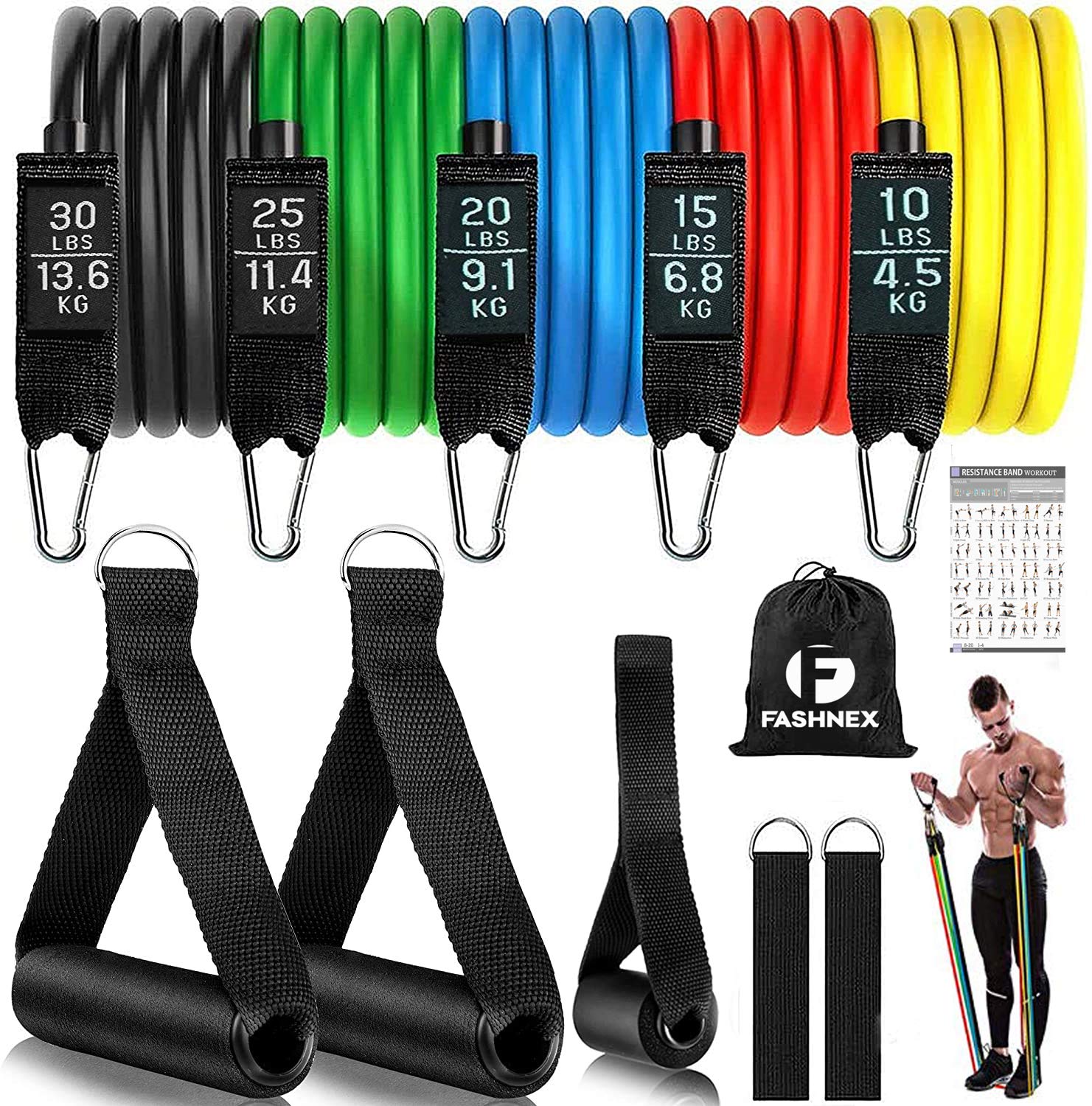


2. Controlling and Extending Time Under Tension (TUT)
Time under tension refers to the total duration that a muscle is actively contracting against a load during a set. Many lifters drop weights quickly using gravity and bounce them at the bottom of the movement. Instead, you can optimize your overload by executing a controlled, intentional tempo. Try slowing down the eccentric or lowering phase of your lift to 3 or 4 seconds, pausing briefly at the peak of contraction, and then exploding through the concentric lifting phase. This deliberate control destroys momentum, creates massive mechanical tension, and forces your muscle fibers to work exponentially harder without needing a heavier plate.
3. Executing Strict Form and Range of Motion
Improving your movement execution is a highly underrated method of progressive overload. Performing a deep, full-range squat where your thighs drop completely parallel to the ground provides vastly superior muscle-building tension compared to performing a half-squat with a heavier barbell weight. By emphasizing a full range of motion, you challenge the target muscle at its longest, most vulnerable length, which stimulates a greater hypertrophic response. If your form is cleaner, smoother, and more stable than it was in your previous workout session, you have achieved authentic progression.
4. Manipulating Set Volume and Training Density
Training volume is calculated by multiplying your total sets by your repetitions and the weight lifted. You can elevate this overall workload by simply adding an extra high-quality working set to an exercise. Alternatively, you can improve your training density by reducing your rest intervals between sets. If you previously rested for 3 minutes between intense sets of dumbbell rows, reducing that rest window down to 2 minutes while maintaining the exact same reps and weight increases the metabolic stress on your muscular system, driving a powerful new stimulus for growth.
5. Increasing Mind-Muscle Connection and Focus
Mind-muscle connection is the ability to consciously visualize and actively channel internal tension directly into the specific muscle you are training. Instead of just trying to move a weight from point A to point B, focus entirely on forcing the target muscle to initiate and complete the entire contraction. Developing this precise concentration ensures that secondary muscles do not take over the lift, meaning you get significantly more muscle-building efficiency out of every single repetition you perform in the gym.
How to Track and Log Your Overload Metrics
Because progressive overload involves keeping track of so many complex training variables like tempo, rest periods, sets, and precise repetitions, relying on your memory is an easy way to stall out your progress. If you enter the gym without a clear, objective plan, you will likely default to using the same weights and patterns over and over again. To systematically avoid this, you can actively utilize digital tracking platforms like the WORKOUT-LOG, which enables you to seamlessly record your exercises, sets, reps, and overall training performance to guarantee you are constantly moving forward.
Fuelling Your Training and Recovery Progress
Forcing your body to handle a consistently increasing workload week after week requires a significant amount of underlying physiological energy. If you are not properly managing your nutritional recovery, your body will rapidly struggle to repair the structural muscle tissue damage you cause during your training sessions. This recovery failure can quickly lead to systemic overtraining, persistent strength regressions, and physical stagnation.
CHECK OUT - BEST MUSCLEBLAZE WHEY PROTEIN
MuscleBlaze Biozyme Performance Whey Protein Powder, Chocolate Peanut Butter (2kg / 4.4lbs) | 25g Protein Per Scoop
Check Price on Amazon


Nutritional Strategies for Maximum Progression
To ensure your muscles can handle progressive stress, you must consume adequate daily protein and calories to support recovery. Managing your macronutrients perfectly ensures that your glycogen stores stay full, giving you the physical stamina required to hit your repetition targets. To handle your daily caloric requirements with complete accuracy, you can use the CAL-TRACK system. For a completely streamlined approach to your nutrition, you can instantly build a personalized meal structure with the CUSTOM DIET-PLAN-MAKER to match your exact workout volume needs.
Frequently Asked Questions (FAQs)
How often should I attempt to progressively overload an exercise?
You should aim to achieve some small form of progression during every single training session. However, this does not mean you will add raw weight or extra repetitions every time. A workout where you execute the exact same weight and reps as last week, but do so with shorter rest intervals or far cleaner lifting technique, is still a highly successful progressive overload session.
What should I do if my strength completely stalls on a specific lift?
If you cannot increase your weight or reps on an exercise for several weeks, you have hit a progress plateau. Instead of forcing heavier weights with poor form, try changing your progression method. Focus heavily on slowing down your tempo, reducing your rest periods, or briefly lowering the weight by 10% to practice a complete, strict range of motion before building your numbers back up.
Can beginners use non-weight overload methods effectively?
Beginners can absolutely utilize non-weight overload methods, and focusing on form and tempo is highly recommended. Because beginners experience rapid neurological adaptations, they can usually add weight to the bar fairly quickly. However, prioritizing strict movement form and controlled time under tension early on sets an excellent foundation for safe, long-term muscle growth.
Conclusion
True progressive overload is a comprehensive strategy that reaches far beyond the concept of simply loading more weight onto a bar. By mastering advanced repetition blocks, controlling your movement tempo, extending your time under tension, and executing a flawless range of motion, you can continuously stimulate muscle hypertrophy while protecting your joints. Keep your training parameters meticulously organized, track your metrics diligently, and allow your body to build high-quality muscle safely and systematically over time.
Comments
Post a Comment