.png) HOME
HOME DIET PLAN
 START
START CAL-TRACK
 SHARE
SHARE.png)


Progressive Overload Explained – The Only Rule You Need for Muscle Growth
👉🏻COUNT MY CALORIES FREE OF COST
What Is Progressive Overload?
Definition
Progressive overload is the gradual increase of stress placed on the muscles over time. When muscles are exposed to a stimulus greater than what they are used to, they adapt by becoming stronger and larger. Without increasing resistance, volume, or intensity, your body has no reason to grow.
How Muscles Actually Grow (Science Explained)

Mechanical Tension
Lifting heavier weights increases mechanical tension on muscle fibers, which stimulates muscle protein synthesis.
Metabolic Stress
Higher repetitions and shorter rest periods create metabolic stress, contributing to hypertrophy.
Muscle Fiber Damage
Controlled micro-tears during resistance training signal the body to repair and rebuild stronger fibers. Progressive overload ensures these growth signals continue over time.
Different Ways to Apply Progressive Overload
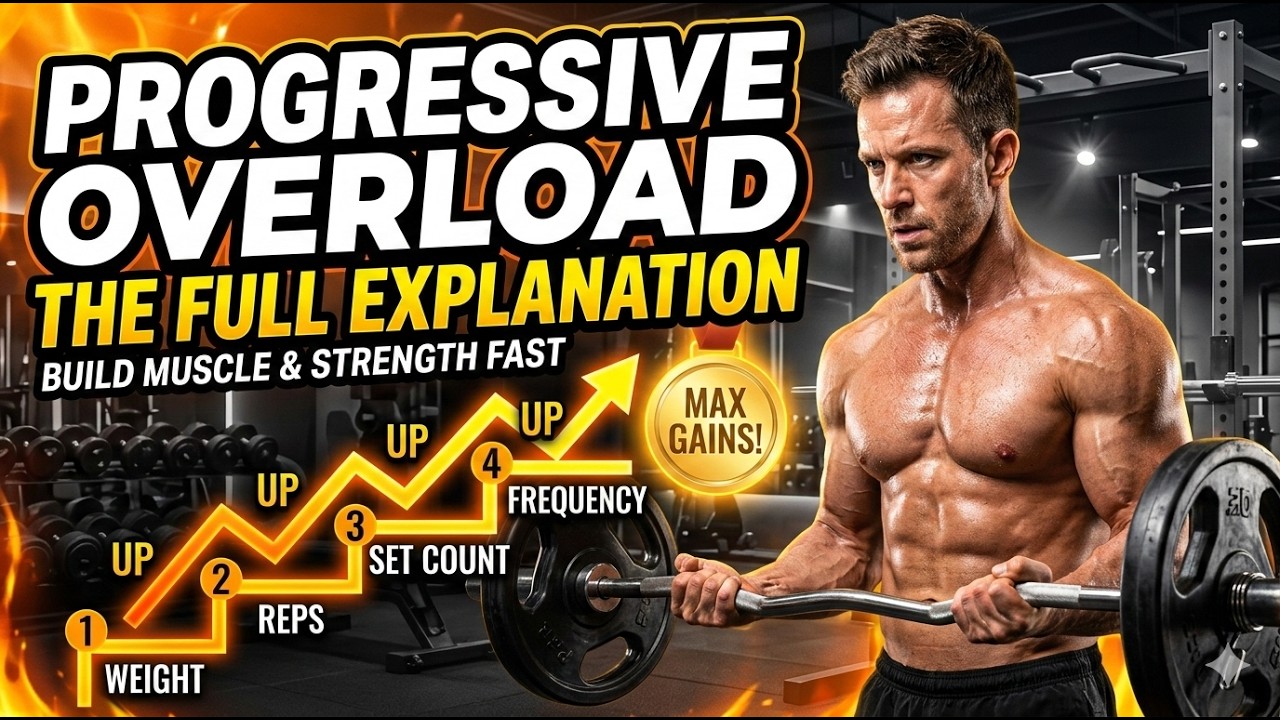
1. Increase Weight
The most common method is adding more weight gradually. Even a small increase of 1–2 kg over weeks creates adaptation.
2. Increase Repetitions
If you cannot increase weight, increase reps while maintaining good form. Example:
- Week 1: 8 reps
- Week 2: 10 reps (same weight)
3. Increase Sets (Training Volume)
Adding more sets increases total workload and muscle stimulus.
4. Improve Technique and Range of Motion
Better control and deeper range of motion increase muscle tension even without adding weight.
5. Reduce Rest Time Strategically
Shortening rest periods increases training intensity and metabolic stress.
How Much Progression Is Ideal?
Progress does not mean adding weight every session. Realistic progression looks like:
- Small weekly improvements
- Better control of same weight
- More total reps across sets
Muscle growth is a long-term adaptation process, not an overnight change.
Common Mistakes in Progressive Overload
Ego Lifting
Increasing weight too quickly with poor form reduces muscle activation and increases injury risk.
No Tracking
If you do not track weights and reps, you cannot measure progress.
Changing Programs Too Frequently
Switching routines every few weeks prevents measurable overload. Consistency matters more than complexity.
Progressive Overload for Beginners vs Advanced Lifters
Beginners
Beginners can progress quickly because their muscles are highly responsive to new stimulus.
Intermediate Lifters
Progress becomes slower and requires more structured programming.
Advanced Lifters
Small incremental increases and periodization strategies are necessary.
Does Progressive Overload Work for Fat Loss?
Yes. While fat loss depends on calorie deficit, maintaining progressive overload helps preserve muscle mass during dieting.
Scientific Conclusion
Progressive overload is not optional — it is essential. Muscle growth occurs only when muscles are consistently challenged beyond their current capacity. Whether you increase weight, reps, sets, or intensity, the goal is to create a gradual upward trend in training stimulus. Track your workouts, focus on proper form, and prioritize steady progression. Over time, small improvements compound into significant muscle growth.
CHECK OUT THE - Best Workout Routine🏋🏻♀️ – Complete Guide to Different Training Splits💪🏻 & Who Should Follow Them✅
❓Frequently Asked Questions (FAQs)
How Often Should I Increase Weight?
Increase weight when you can complete your target reps with proper form consistently.
Can Beginners Use Progressive Overload?
Yes. Beginners often see faster progress because their adaptation potential is high.
Is Progressive Overload Only About Lifting Heavier?
No. It can involve increasing reps, sets, volume, intensity, or improving technique.
What Happens If I Stop Progressing?
If overload stops, muscle growth will plateau because the body adapts to constant stimulus.


Comments
Post a Comment